Printing Guidelines
Printing Guidelines for Synthetic Paper and Self-Adhesive Materials
Reliable print production begins with selecting a material grade that matches the press, ink system and finished application.
PP and PET synthetic paper, together with self-adhesive materials, offer options for durable printed products. However, their performance depends on the specific surface treatment, material construction and production conditions. This guide outlines the main considerations for material selection, printing trials and finishing.
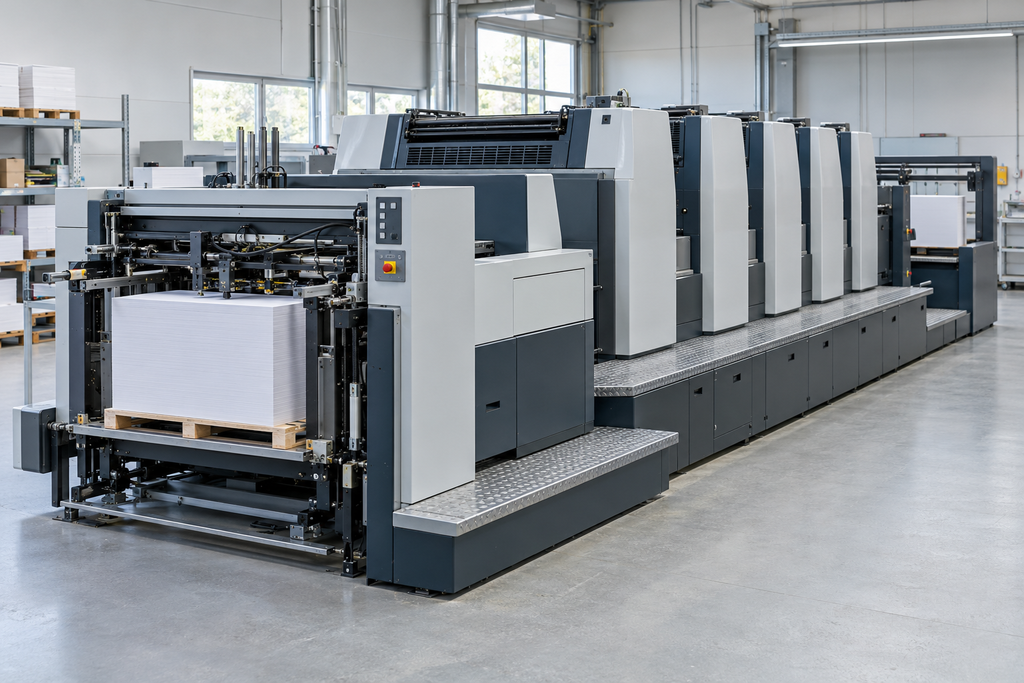
Offset Printing
Successful offset printing on synthetic paper requires coordination between the substrate, ink and press conditions. Before production, confirm whether the selected grade is intended for conventional offset or UV offset printing.
For conventional offset, use an ink system recommended for the material surface. Review ink–water balance, drying conditions and stacking practices with the material and ink suppliers. A setting developed for wood-pulp paper should not automatically be carried over to synthetic substrates.
For UV offset, evaluate both curing and adhesion. A print that appears dry may still show weak adhesion during handling or finishing. Check the sample after the recommended conditioning period and inspect for distortion, ink lifting and marking.
Before approving the run:
- Confirm the exact material grade and printable side.
- Verify compatibility with the selected ink system.
- Check feeding, registration and solid-colour reproduction.
- Assess drying or curing before stacking and finishing.
For pre-die-cut self-adhesive sheets, also evaluate label lifting and the stability of the complete construction during printing.
Inkjet Printing
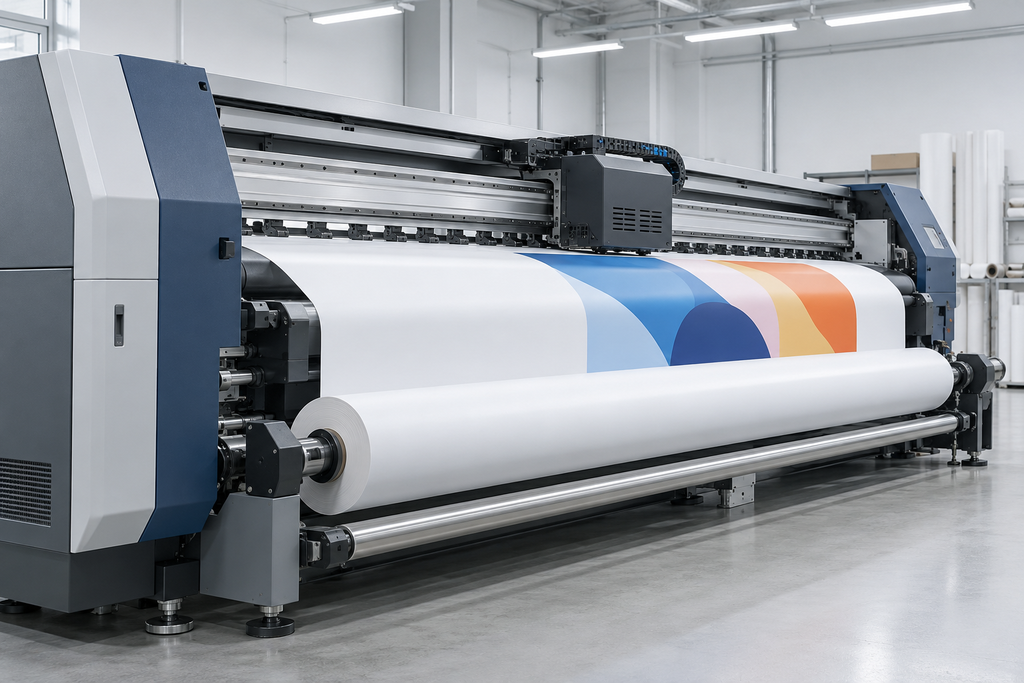
Inkjet compatibility depends on the interaction between the ink and the printable surface. Identify the ink technology before selecting the material: aqueous dye, aqueous pigment, solvent, latex or UV inkjet.
A coating developed for aqueous ink absorption differs from a surface intended for other printing processes. The material name alone—such as PP or PET—does not establish compatibility with a particular printer.
For roll-fed production, assess web handling as well as print quality. Check winding consistency, tracking and the material’s response to the proposed drying or curing conditions. Use the printer manufacturer’s recommended starting settings and refine them through a controlled trial.
Include these checks in the trial:
- Fine text, gradients and areas of heavy ink coverage.
- Ink spreading, image sharpness and colour consistency.
- Surface drying or curing and subsequent adhesion.
- Curl, distortion and stable roll handling.
For products exposed to moisture, test the finished print separately from the unprinted substrate. Water resistance of the base material does not establish water resistance of the ink or coating.
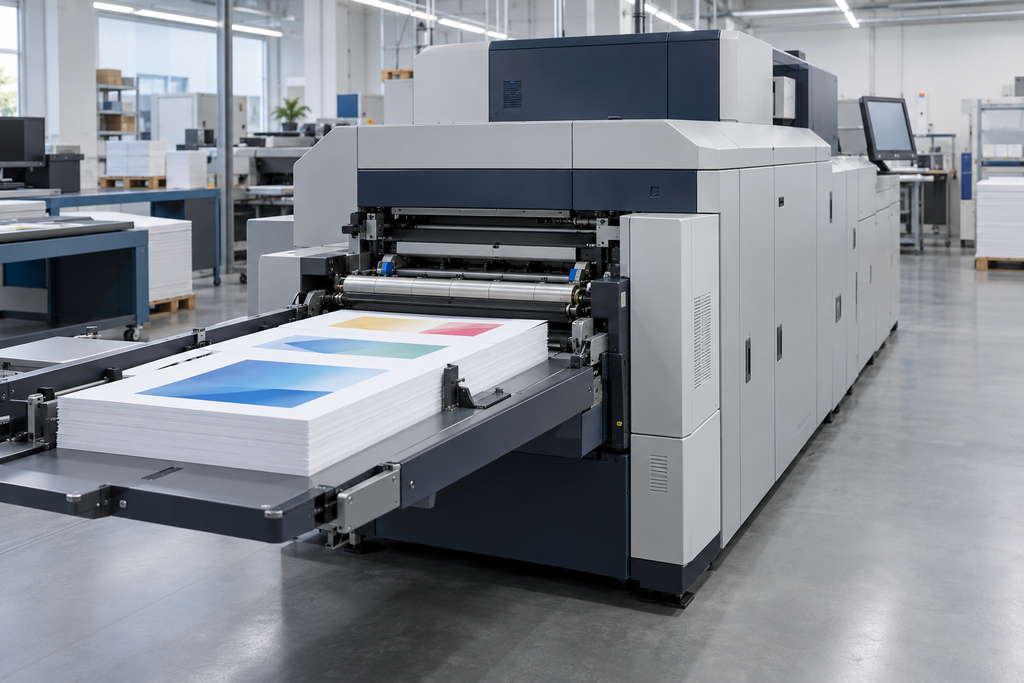
Digital Printing: Toner and HP Indigo
Digital printing covers different technologies, each with its own substrate requirements. Dry-toner equipment and HP Indigo presses should therefore be evaluated separately.
For dry-toner printing, confirm that the material is suitable for the press model, fusing conditions and media path. Review the machine’s permitted dimensions, thickness range and media settings before running samples.
For HP Indigo, verify compatibility of the exact material grade with the intended press and whether surface preparation or a primer is required. Compatibility information for another substrate cannot be transferred to a YISHU grade without confirmation.
For self-adhesive sheets, assess the complete construction—including facestock, adhesive and liner—rather than considering the face material alone.
Key production checks include:
- Reliable feeding without double feeds or jams.
- Toner or ink adhesion after suitable conditioning.
- Sheet flatness and dimensional stability.
- Consistent performance during duplex printing, where required.
Record the approved media profile and settings so repeat orders can be evaluated against the same production conditions.
Production Trials and Print Quality Checks
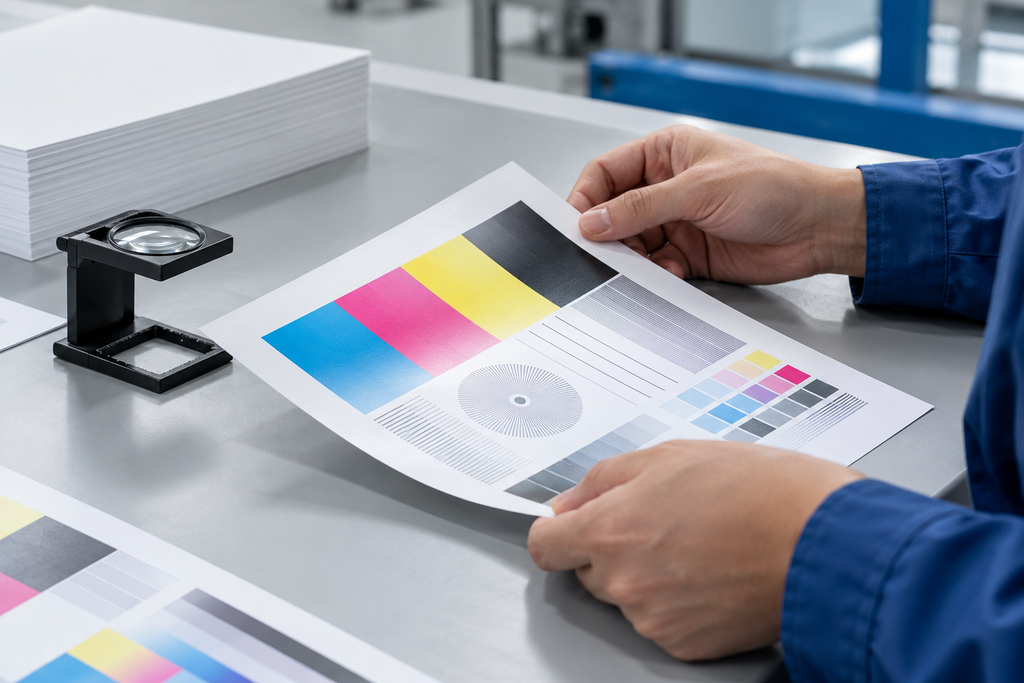
A production trial should reproduce the intended job closely enough to support a purchasing decision. Use the proposed material grade, printing equipment, ink system and finishing process.
Select artwork that challenges the application. Heavy coverage can reveal drying or curing issues; fine lines can highlight image quality problems; barcodes require verification using an appropriate reader or verifier.
Agree on acceptance criteria before testing. Depending on the application, these may include colour consistency, registration, adhesion, rub resistance or performance after exposure to water and cleaning products.
Keep a trial record covering:
- Material grade, thickness and batch identification.
- Press model, ink system and relevant settings.
- Conditioning time before assessment.
- Finishing method and observed results.
- Agreed acceptance criteria and approval status.
A visual inspection is a useful starting point, but it should be supported by tests that reflect how the finished product will be used.
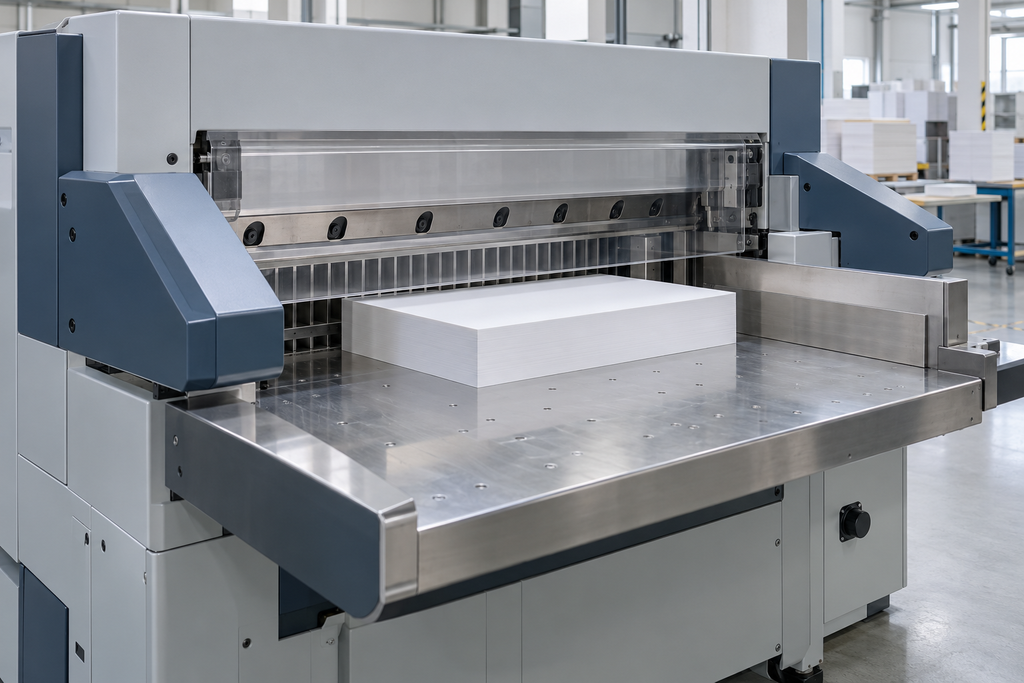
Cutting, Folding and Label Converting
Printing approval should include finishing performance. Cutting, folding and die-cutting can reveal issues that are not visible on an unconverted sheet.
Before finishing, confirm that the print is ready for handling. Keep blades and contact surfaces clean, and establish cutting conditions appropriate to the material and equipment. Avoid applying one stack height or pressure setting to every grade.
For folded products, inspect crease lines for cracking, ink loss and changes in appearance. Evaluate repeated folding when the application requires it.
For self-adhesive labels, check die-cut quality, liner integrity, matrix removal and dispensing. Test application on the actual container or surface under the intended service conditions.
Assess the finished product for:
- Clean edges and accurate dimensions.
- Print resistance during handling and converting.
- Acceptable fold appearance and durability.
- Reliable label dispensing and application.
Frequently Asked Questions
Can one synthetic paper grade be used for every printing process?
Is PET automatically suitable for laser printing?
Does waterproof material guarantee a waterproof printed product?
What information should I provide when requesting a sample?
Find a Material for Your Printing Process
Discuss your production requirements with YISHU before selecting a material.
Send us your printing process, equipment model, required specifications and finished application. We can review suitable material options and sample requirements for your evaluation.
Email: yishu.materials@gmail.com