HP Indigo Printing Guide for Synthetic Paper and Label Materials
Choosing a substrate for HP Indigo printing involves more than selecting the right thickness. Surface treatment, ElectroInk adhesion, feeding performance and finishing requirements all influence whether a material is suitable for your production workflow.
This guide helps commercial printers, label converters and material distributors evaluate synthetic paper and self-adhesive materials before placing bulk orders.
Share your HP Indigo press model, application and material requirements with YISHU to discuss sample availability and the information needed for a production trial.
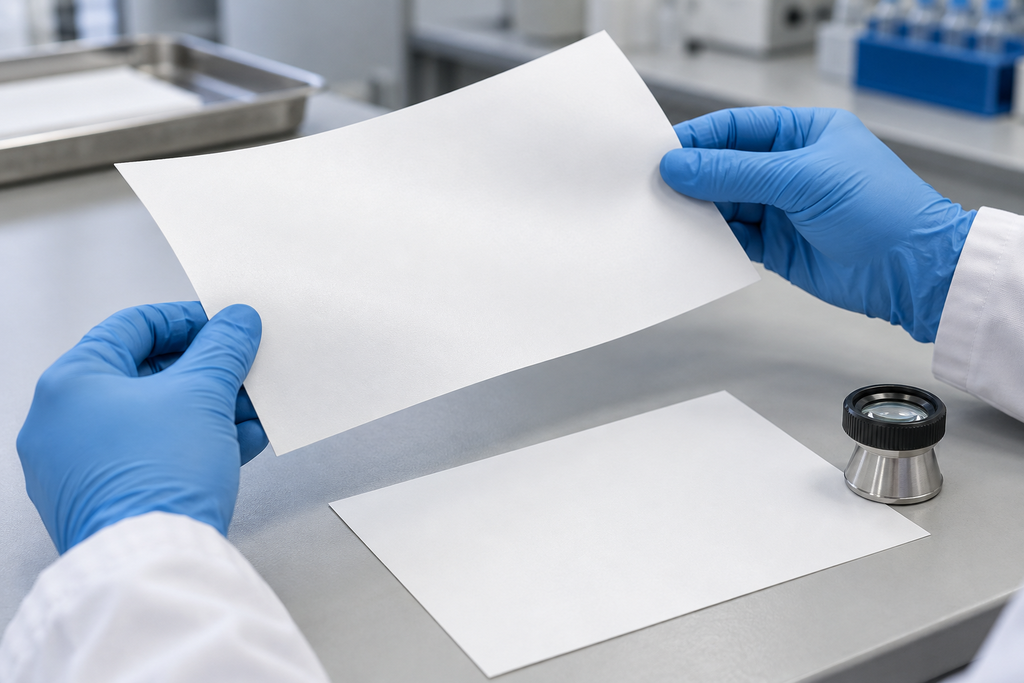
Why Surface Compatibility Matters for HP Indigo Printing
HP Indigo uses Liquid Electrophotography and HP ElectroInk. The image transfers from a heated blanket to the substrate, making the interaction between the ink and material surface an essential part of substrate qualification. hp.com
A material described as suitable for UV inkjet, offset or dry-toner printing should not automatically be considered suitable for HP Indigo.
Before ordering, confirm:
- The exact material grade and printable side.
- Whether the surface has been prepared for the intended Indigo workflow.
- Whether a primer is required and which priming process is appropriate.
- Whether both sides need to receive print.
- Any storage or shelf-life requirements associated with the treated surface.
Primer selection depends on the substrate and press configuration. Confirm the treatment route with the material supplier and your press support team before running a trial.
How to Select Synthetic Paper and Labelstock for HP Indigo
Start with the finished application, then define the material construction and supply format.
For synthetic paper, identify whether you need PP or PET, the required stiffness and opacity, and whether the product will be folded, punched or exposed to water.
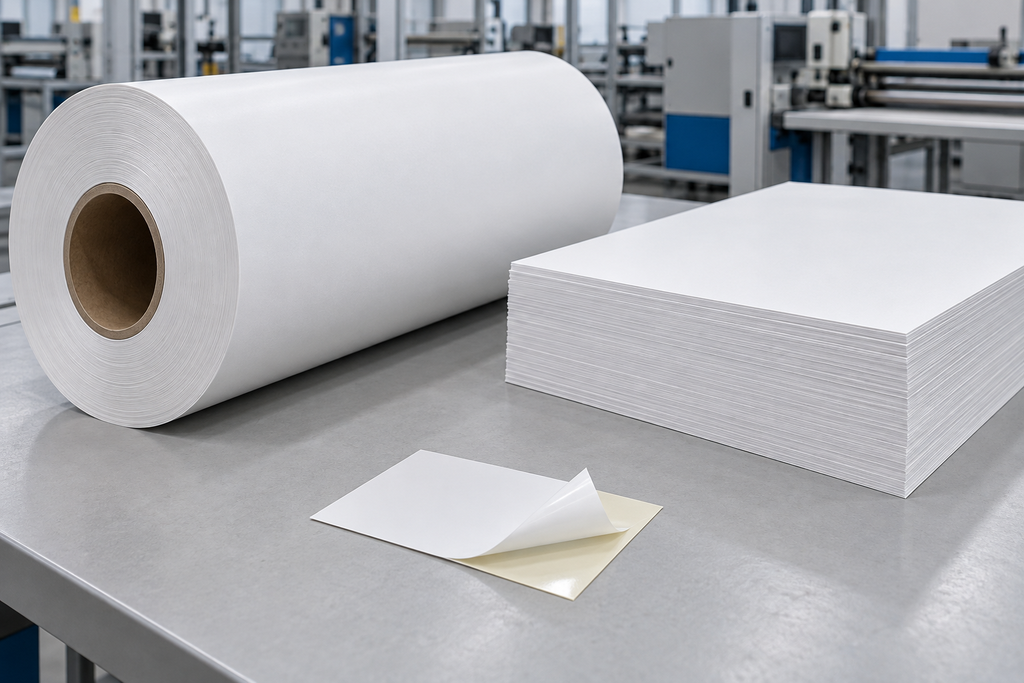
For self-adhesive labelstock, evaluate the complete construction: facestock, adhesive and release liner. Printing performance and label application performance should be assessed separately.
| Information to Provide | Why It Matters |
|---|---|
| Exact HP Indigo press model | Establishes the relevant media specifications and workflow |
| Application and service conditions | Defines durability and finishing requirements |
| Material type and thickness | Supports grade selection and handling assessment |
| Sheet size or roll dimensions | Confirms the required supply format |
| Single-sided or double-sided printing | Defines printable-surface requirements |
| Adhesive and liner, where applicable | Identifies the complete labelstock construction |
| Finishing process | Highlights cutting, folding and lamination requirements |
| Trial quantity and expected order volume | Helps plan sample evaluation and purchasing |
Use the current press documentation to confirm acceptable dimensions and media limits. A substrate must be assessed for the specific press and configuration.
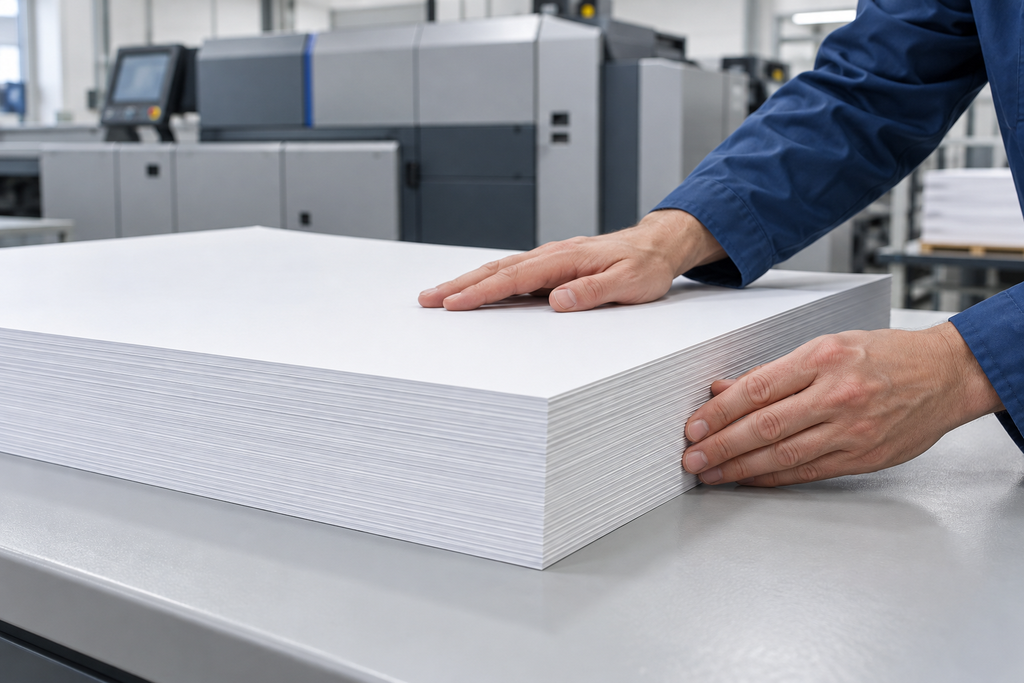
Prepare Synthetic Sheets for Stable Feeding
Good preparation helps make a press trial more consistent and easier to evaluate.
Keep materials protected from dust and contamination. Allow unopened packs to reach the pressroom conditions before opening, following the supplier’s handling instructions.
Before loading, inspect sheet flatness, edge quality and stack alignment. For die-cut label sheets, check for lifted corners, exposed adhesive or damaged liners.
During the trial, monitor:
- Sheet separation and double feeds.
- Skew, misfeeds and interruptions.
- Curl and output-stack alignment.
- Static-related sticking between sheets.
- Label lifting or adhesive contamination.
Set feeder air, suction and other handling controls according to the exact press and material. If static affects separation, discuss suitable control measures with the press operator or service team.
Record the adjustments that produce acceptable results so the same setup can be reviewed during repeat orders.
Test ElectroInk Adhesion and Finishing Before Bulk Orders
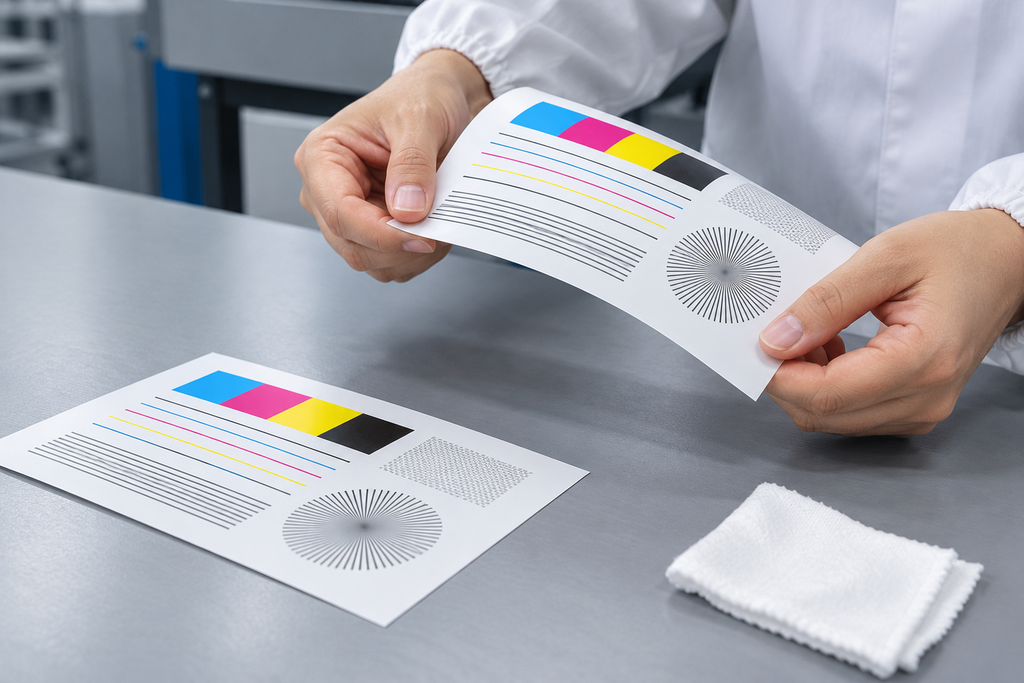
An attractive print sample is only the starting point. Qualification should include the handling and finishing operations the finished product will experience.
Use representative artwork containing solid areas, fine text and the image coverage expected in production. Include both sides if duplex printing is required.
Agree on the test method, assessment timing and acceptance criteria before comparing samples.
Ink adhesion and rub resistance
Evaluate ink retention using an agreed procedure. Record the tape specification where a tape test is used, together with the test conditions and observations. A simple tape pull should not be described as a standardized test unless the complete applicable method is followed.
Cutting, folding and punching
Inspect printed edges, folds and punched areas for cracking, flaking or separation. Use the intended finishing equipment wherever practical.
Lamination and end-use exposure
Where relevant, test the actual laminate, adhesive and exposure conditions. Water resistance of the base material alone does not establish the durability of the finished printed product.
Retain approved samples and trial records as a reference for future deliveries.
Discuss Your HP Indigo Material Requirements with YISHU
Looking for synthetic paper or label materials for an HP Indigo project?
Send YISHU your press model, finished application and target specifications. These details help us discuss suitable sample options and identify what needs to be verified before a bulk purchase.
Please include:
- Company name and country.
- HP Indigo model.
- Required material and thickness.
- Sheet size or roll specifications.
- Printable side requirements.
- Adhesive and liner details, if applicable.
- Finishing process and expected order quantity.
Frequently Asked Questions
Can all synthetic papers be printed on HP Indigo presses?
No. Suitability depends on the specific grade, surface preparation, press model and application. General digital-printing suitability does not establish HP Indigo compatibility.
Does synthetic paper require a primer for HP Indigo printing?
Some substrates require a compatible treatment or priming process. Confirm the requirements for the exact material and press configuration before testing.
How can I check whether a material is HP Indigo certified?
Check the exact supplier, grade and relevant press information in the current HP PrintOS Media Locator. HP recommends testing media before use when it is not listed.
Can the same setup be used for every HP Indigo press?
Do not assume settings transfer between models. Media limits, feeding systems and priming options can differ. Follow the documentation for your press and record the settings used during qualification.
What should I send when requesting samples?
Provide your press model, material construction, thickness, dimensions, application and finishing requirements. Include your planned trial quantity and estimated bulk demand.