How to Print on HDPE Spunbond: Flexo, UV, Screen and Digital Printing
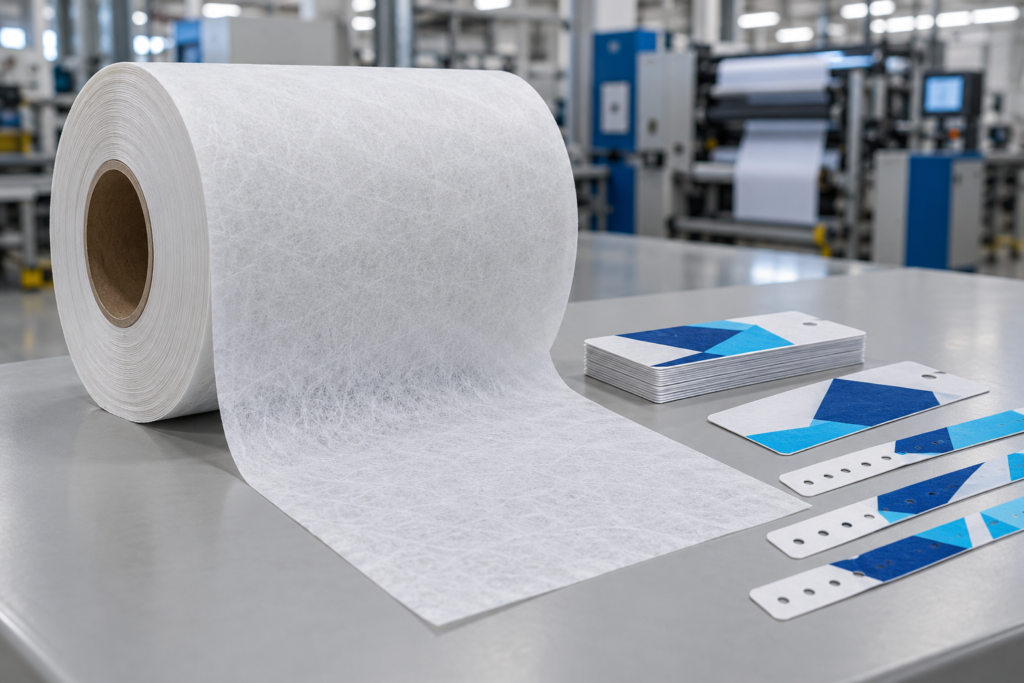
Ink rubbing off, wrinkled rolls, unstable registration and feeding interruptions can increase waste and delay delivery. For printers and converters, these problems make material selection just as important as press settings.
When sourcing HDPE spunbond from YISHU, start with your printing process and finished application. A material described simply as “printable HDPE” is not a complete specification.
The right choice depends on the material grade, surface preparation, ink system, equipment and durability required after converting.
This guide explains what to check when evaluating HDPE nonwoven material for flexographic, UV inkjet, screen and other digital printing processes—and what information to send YISHU before requesting samples or a quotation.
1. Start with Your Printing Requirements
Before comparing material prices, define how the material will be printed, converted and used.
A wristband converter may prioritize flexibility, wet rub resistance and perforation performance. A tag printer may need stiffness, clear small text and reliable sheet feeding. An outdoor graphics buyer must also consider sunlight, weather exposure and attachment conditions.
When contacting YISHU, include:
- Finished product and intended use.
- Printing process and machine model.
- Ink type or ink reference.
- Preferred hard or soft structure.
- Required basis weight and thickness, if known.
- Roll width, roll length and core size, or sheet dimensions.
- Downstream operations such as slitting, perforating or folding.
- Estimated trial quantity and regular order volume.
If you do not know the required grade, describe the application and the problems you need to avoid. A current material specification or reference sample can make the discussion more useful.
HDPE nonwoven terminology varies between suppliers. Confirm the manufacturing process and exact grade rather than assuming that all paper-like HDPE materials have the same printing behavior.
2. Compare Printing Methods for HDPE Spunbond
Flexographic, screen and digital printing describe printing processes. UV describes an ink-curing technology that may be used within several of those processes.
For a useful material inquiry, specify the complete system—for example, water-based flexo, UV screen printing or UV LED inkjet.
| Printing process | Typical reason to evaluate it | Main points to qualify |
|---|---|---|
| Flexographic printing | Repeat roll-to-roll production, printed wristband stock and tags | Ink transfer, tension, impression, drying and rewinding |
| UV inkjet printing | Short runs, variable graphics and production without plates | Adhesion, cure, flexibility, heat exposure and hold-down |
| Screen printing | Spot-color graphics and controlled ink deposition | Ink chemistry, deposit thickness, drying and blocking |
| Other digital processes | Personalization, variable data and short-run production | Exact machine compatibility, coating, feeding and thermal exposure |
No single printing process suits every HDPE grade. Confirm the proposed material–ink–machine combination before placing a bulk order.
3. Flexo Printing on HDPE Spunbond Rolls
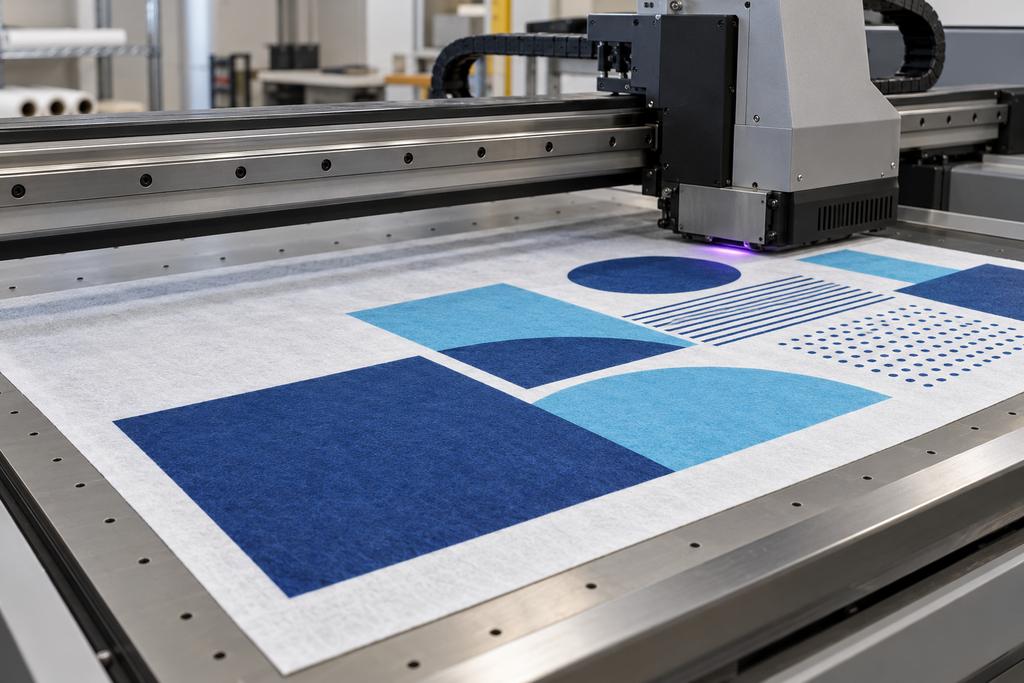
Flexographic printing is an option to evaluate for repeated roll-to-roll orders where production volume and artwork justify plates and press setup.
Successful production requires both controlled ink transfer and stable web handling.
Match the Ink to the Material Surface
Give your ink supplier the actual material sample, including information about any treatment or coating.
An ink that performs well on smooth polyethylene film may behave differently on a bonded-fiber HDPE surface. Confirm the ink system through a representative printing trial.
Record:
- Ink manufacturer and reference.
- Ink batch.
- Relevant viscosity and pH settings.
- Approved dilution or additives.
- Drying or curing conditions.
- Time between printing and evaluation.
These records help distinguish material-related problems from changes in ink preparation or press operation.
Establish Stable Tension and Impression
Use the trial to determine the lowest web tension that maintains stable transport and registration.
Excessive impression should not be used as the only response to uneven coverage. Review ink transfer, anilox selection, plate and mounting tape together.
During the run, inspect:
- Fine-line definition.
- Solid-area coverage.
- Registration.
- Web tracking.
- Wrinkles or dimensional changes.
Inspect the Rewound Roll
A print that appears dry at the press exit may still transfer under winding pressure.
After the agreed conditioning period, unwind part of the trial roll and check for ink transfer, blocking, wrinkles and roll deformation.
For wristband production, continue the evaluation through slitting, perforating and closure assembly. Approval should cover the converted product as well as the printed web.
4. UV Inkjet Printing: Check Adhesion, Cure and Flexibility
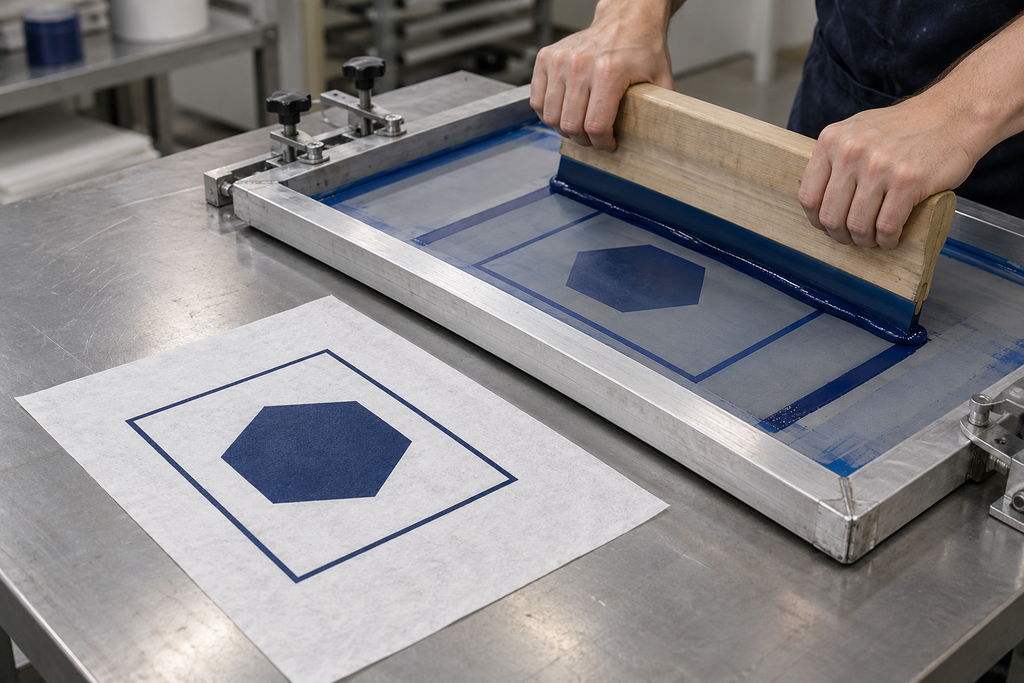
UV inkjet printing can be considered for short runs and variable artwork. However, a cured ink layer does not automatically have good adhesion to the material.
Ink cure and ink adhesion must be evaluated separately.
Print Representative Artwork
Include the most demanding features of the actual job:
- Solid color patches.
- Fine lines and small text.
- Light tints.
- Heavy-coverage areas.
- Barcodes or variable codes, where required.
A small, lightly printed sample may not reveal the problems that occur with a dense production design.
Evaluate Adhesion After Conditioning
Follow the ink supplier’s recommended conditioning interval before evaluating the print.
Check whether the image remains attached after rubbing, bending and relevant service exposure. Inspect whether a failure involves the ink, a surface coating or the material itself.
Monitor Material Temperature
During the trial, inspect the material for curling, distortion, registration drift and changes in web tracking.
Adjust speed, curing and cooling within the approved operating window for the equipment and ink. Reducing curing energy without checking cure quality can introduce a different defect.
Check Printed Flexibility
For wristbands, folded tags and flexible components, bend or flex the printed sample in a way that represents actual use.
Pay particular attention to heavy ink coverage and areas close to folds or perforations. Look for cracking, flaking or loss of adhesion.
5. Screen Printing on HDPE Nonwoven Material
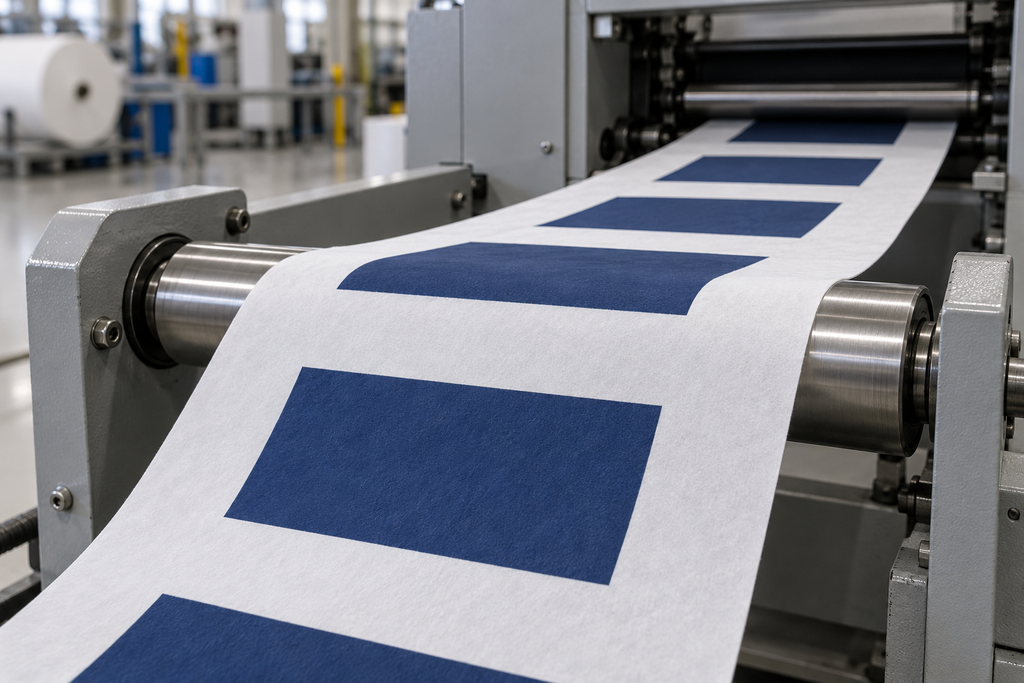
Screen printing is an option for spot-color graphics and designs requiring controlled ink deposition.
The main qualification points are ink compatibility, deposit thickness and the flexibility required after printing.
Specify the Finished Use to Your Ink Supplier
Provide the actual substrate and explain whether the finished item will encounter:
- Repeated bending.
- Water or moisture.
- Abrasion.
- Outdoor exposure.
- Stacking or packing pressure.
Do not assume that a general-purpose screen ink is suitable for every HDPE grade.
Any solvent or additive adjustment should remain within the ink supplier’s guidance and be checked for effects on the material.
Control Ink Build
A thicker ink deposit may affect drying, curing, flexibility and blocking.
Establish the mesh, stencil, squeegee and deposit through a trial using representative artwork. Inspect the material after drying or curing, then repeat the inspection after stacking or packing.
For flexible products, include bending and rubbing before approval.
6. Digital Printing: Specify the Exact Technology
“Digital printable” does not identify a single material requirement.
Different systems use different inks, coatings, transport mechanisms and thermal conditions.
| Digital technology | What to confirm |
|---|---|
| UV / UV LED inkjet | Ink compatibility, adhesion, cure, flexibility and material temperature |
| Aqueous inkjet | Suitability of the surface and any required ink-receptive coating |
| Latex inkjet | Qualified grade, curing profile, feeding and heat exposure |
| Liquid-toner printing | Exact press compatibility and any required primer or preparation |
| Dry-toner / laser printing | Explicit material and machine compatibility |
| Thermal transfer | Ribbon compatibility, transfer settings and image durability |
When sending YISHU a digital-printing inquiry, include the machine model and ink system, rather than only stating “digital printing.”
Confirm Compatibility Before Heat-Fusing Processes
Do not use an unqualified HDPE material in a conventional heat-fusing laser printer.
The material’s melting point is not an operating-temperature specification. Suitability must account for the equipment, exposure time and material behavior during transport.
Confirm the proposed application with the material supplier and equipment provider before a trial.
Evaluate Feeding on the Actual Machine
For sheet-fed systems, inspect:
- Stiffness and curl.
- Sheet separation.
- Static-related feeding behavior.
- Double feeding.
- Stack consistency.
For roll-fed systems, inspect:
- Edge flatness.
- Tracking.
- Hold-down.
- Wrinkles.
- Printhead clearance within the manufacturer’s guidance.
A successful hand-fed sheet does not establish reliable unattended production.
7. Confirm Treatment, Coating and Printing Side
Surface preparation is part of the material specification.
Before approving a grade, confirm:
- Whether it is untreated, surface-treated or coated.
- Whether preparation applies to one or both sides.
- Which side should be printed.
- Which printing systems have been evaluated.
- Recommended storage conditions.
- Any relevant storage-life guidance.
Surface-energy checks may be useful where the method is appropriate, but readings on textured or porous material require careful interpretation.
A surface-energy result does not replace a finished-print adhesion test.
If a primer is proposed, qualify it together with the material and ink. Do not assume that a primer suitable for one printing system will improve another.
8. Test Print Durability Before Bulk Production
Agree on the evaluation method and acceptance criteria before running the trial.
This makes sample approval more useful and gives purchasing, printing and quality teams a shared reference.
Adhesion Evaluation
For a tape evaluation, record the tape reference, application method, dwell time and removal conditions.
Inspect the failure carefully. Ink removal, coating separation and fiber removal are different outcomes and should be reported separately.
Avoid using a cutting method that damages the flexible substrate and makes the result difficult to interpret.
Dry and Wet Rub Evaluation
Define the rubbing material, load and number of cycles.
If the finished product will encounter moisture, sweat or cleaning agents, include an agreed exposure that represents the intended use.
A repeatable test provides a better purchasing reference than an informal hand rub.
Folding and Flexing
Test the printed material after the intended folding or repeated movement.
Inspect graphics near folds, cut edges, attachment holes and perforations, as well as heavily printed areas.
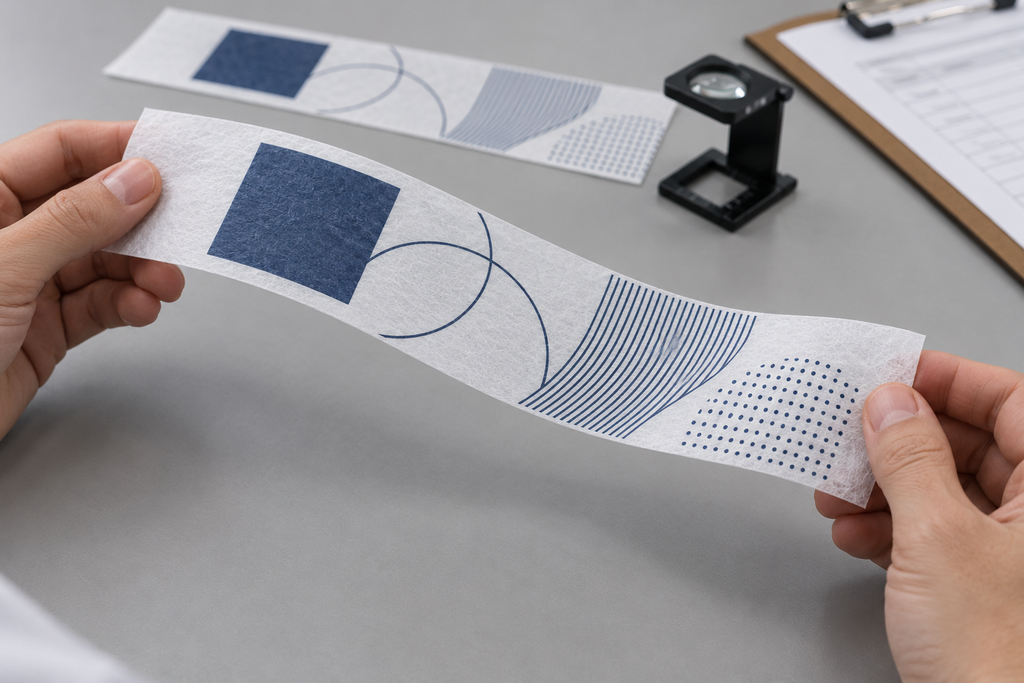
Barcode and Variable-Data Evaluation
Check readability after printing and after relevant exposure.
Where a barcode quality grade is required, use a verifier and an agreed specification. A successful phone scan alone is not a complete acceptance criterion.
Blocking and Print Transfer
Inspect printed material after stacking, packing or rewinding under representative conditions.
Check whether the printed surface sticks to adjacent material or transfers ink to the reverse side.
9. Troubleshooting Common HDPE Printing Problems
| Problem | Factors to investigate | Next step |
|---|---|---|
| Ink beads or coverage is uneven | Print side, contamination, surface compatibility and ink wetting | Confirm the surface specification and evaluate the proposed ink |
| Ink rubs off | Adhesion, drying, curing or coating compatibility | Repeat a defined adhesion and rub evaluation |
| Web wrinkles or changes dimensions | Heat, tension and grade suitability | Review material temperature and web handling |
| Registration drifts | Stretch, temperature, tension or feed instability | Inspect changes throughout the run |
| Ink transfers after rewinding | Drying or cure, ink deposit and winding pressure | Evaluate conditioned and rewound material |
| UV print cracks when folded | Ink flexibility, deposit and cure conditions | Evaluate a more suitable ink–process combination |
| Sheets double-feed | Static, curl, stiffness and feeder setup | Review conditioning and approved feeder settings |
| Codes become unreadable | Contrast, print spread, texture and abrasion | Verify the actual code after relevant exposure |
Record when the defect appears: during printing, after conditioning, after converting or after storage. This information helps narrow the investigation.
10. Match the Test Plan to the Application
Different finished products require different approval priorities.
| Application | Priority checks |
|---|---|
| Wristbands | Flexibility, wet rub, print transfer, perforations and closure performance |
| Product tags | Text clarity, abrasion, folding and attachment-hole performance |
| Outdoor graphics | Weathering, color retention, material strength and attachment performance |
| Printed packaging components | Print transfer, folding, handling and downstream compatibility |
Water resistance alone does not establish outdoor durability. Define the expected location, duration, sunlight, moisture and handling conditions.
For products involving skin contact, assess the complete finished construction, including ink, coatings, adhesives and closures. Base-material information alone does not qualify the finished item.
11. Prepare a Production-Representative Trial
A trial should use the proposed material, actual artwork and intended equipment.
Small sample sheets can help with initial screening. Roll-to-roll production also requires a trial that can reveal handling, registration, drying and rewind behavior.
| Trial record | Information to capture |
|---|---|
| Material | Supplier, grade, batch, structure, basis weight and thickness |
| Surface | Treatment or coating and printing side |
| Format | Roll width, length, core and winding direction, or sheet size |
| Equipment | Machine model and relevant configuration |
| Print system | Ink reference, primer and protective finish |
| Operating conditions | Speed, tension, drying or curing and material temperature |
| Environment | Temperature and relative humidity |
| Print evaluation | Adhesion, rubbing, flexibility, blocking and code readability |
| Converting | Slitting, perforating, folding, cutting or assembly |
| Approval | Acceptance criteria, retained samples and agreed specification |
Retain approved samples and the associated production records. They provide a reference for subsequent orders and quality discussions.
Need HDPE Material for Your Printing Project?
Contact YISHU to discuss material options, sample availability and quotation requirements for your printing and converting process.
Tell Us About Your Requirements
- Finished application: wristbands, tags, race bibs or other products.
- Printing process, machine model and ink system.
- Required GSM and hard or soft structure, if known.
- Roll width, length and core size, or sheet dimensions.
- Trial quantity and estimated regular order volume.
- Any adhesion, feeding or converting problems you need to address.
Prefer email? yishu.materials@gmail.com
Sample availability, format and shipping costs are subject to confirmation. Printing suitability should be validated on your intended equipment.