Wine-spirits-and-craft-beer-labels

Wine, Spirits and Craft Beer Label Materials
Labels for wine, spirits and craft beer need to combine shelf appeal with reliable performance. From printing and converting to bottling and end use, each stage places specific demands on label materials and adhesives. The right combination supports smooth press runs, consistent application on filling lines and lasting label appearance through retail display, refrigeration, humidity and ice-bucket immersion, ensuring dependable adhesion to glass bottles.
Premium Wine Label Materials
Bring out your brand’s character with distinctive labels for wine, spirits and craft beer.
Choose pressure-sensitive label materials that combine premium presentation with the performance your bottles need.
- Premium shelf appeal. Create an elegant finish that reflects your product’s quality and personality.
- Distinctive brand presentation. Explore textures and finishes that help your bottles stand out on the shelf.
- Options for damp conditions. Specify wet-strength facestocks and suitable adhesives for humid storage and ice-bucket applications.
- Support for purchasing needs. Discuss material quality, pricing and delivery schedules for your label production.
Share your bottle type, printing process and exposure conditions to discuss material options and samples for testing.
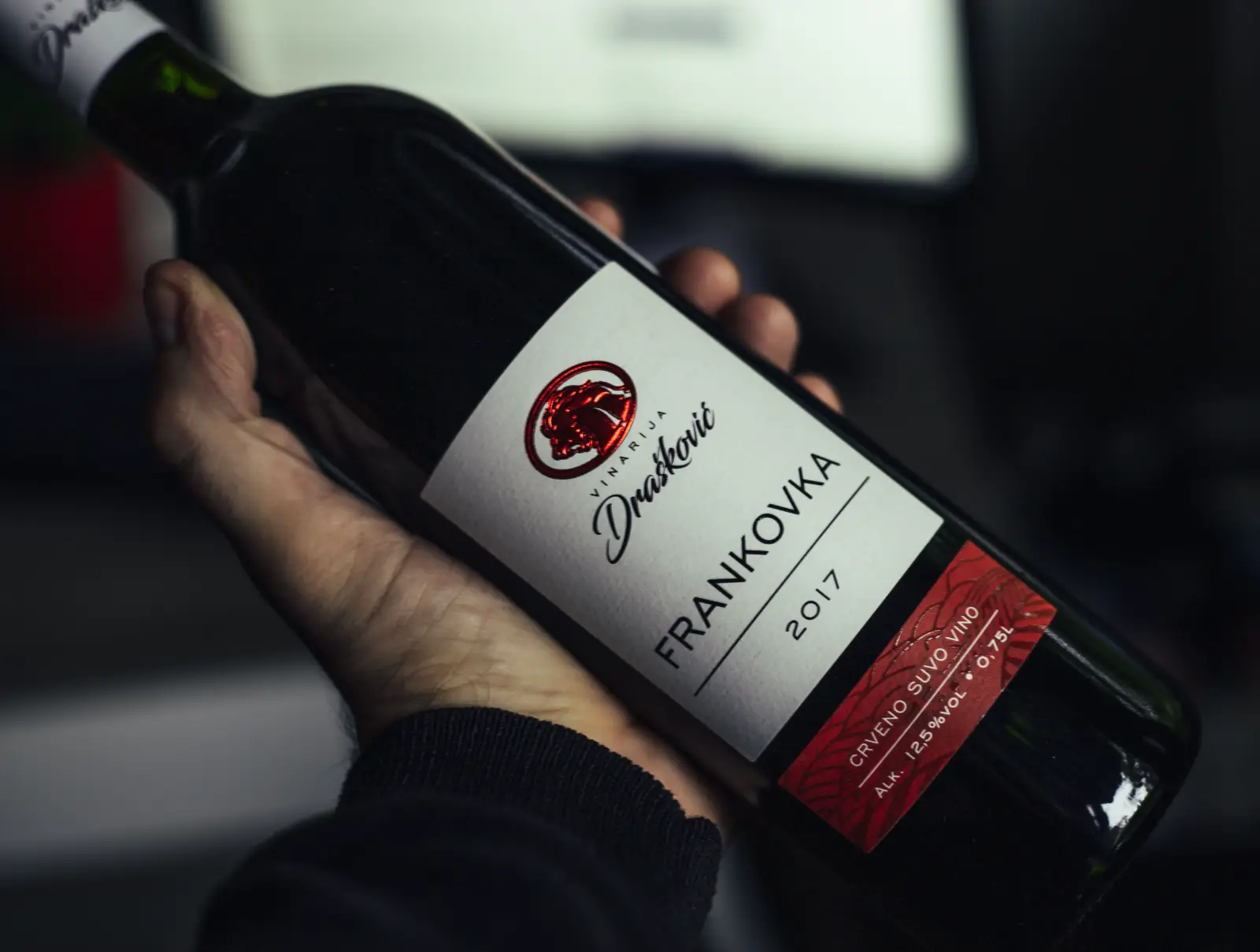
Label Materials for Printing, Bottle Adhesion and Premium Finishing
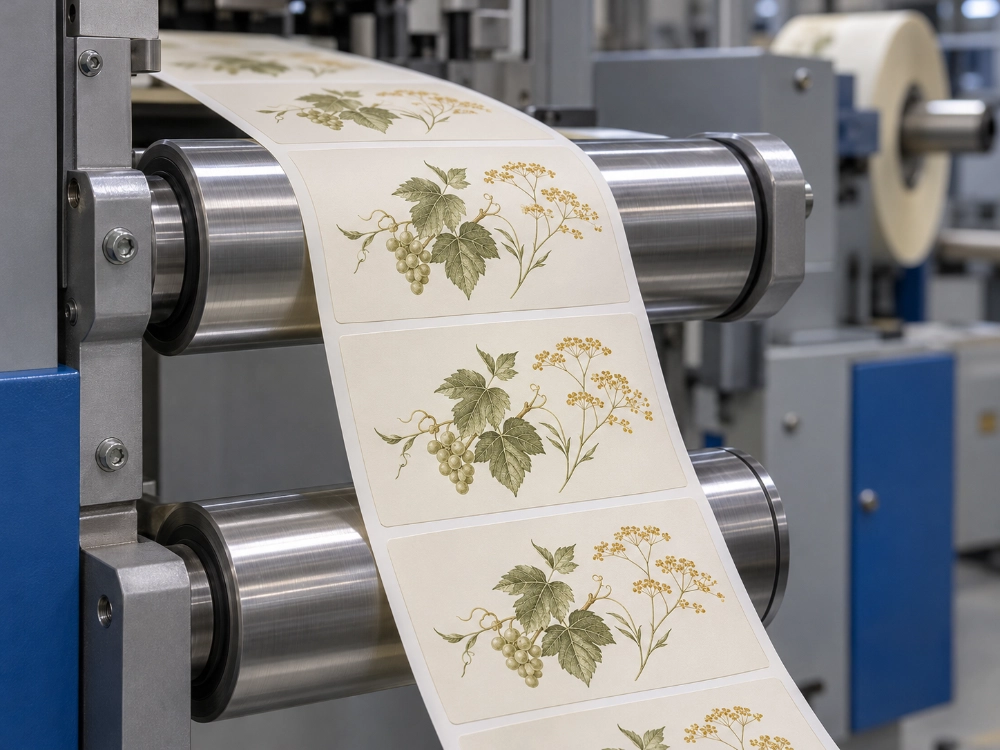
Consistent Printing and Converting
Wine label production demands consistency from the first impression to the final roll. Uniform caliper, dimensional stability and a suitable print surface help maintain registration, reproduce fine details and support predictable feeding. For pressure-sensitive label converters, liner selection also affects die-cutting accuracy, matrix stripping and label dispensing. Matching the construction to offset, flexographic, UV inkjet or digital printing requirements helps reduce setup waste and interruptions across short runs, seasonal designs and larger production volumes.
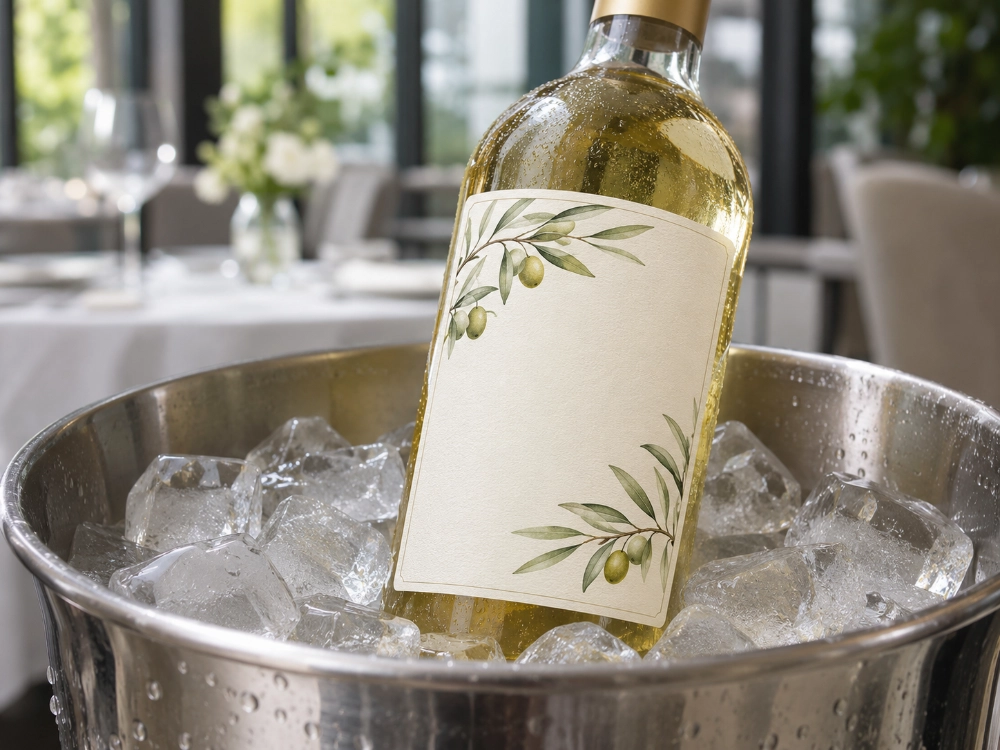
Adhesion for Real Bottle Conditions
Glass bottle labeling involves changing temperatures, moisture and curved surfaces. Dry bottles at room temperature present different requirements from chilled bottles exposed to condensation. Adhesive selection should account for application temperature, bottle surface treatment and storage conditions to help control edge lift, slipping and peeling. Wet-strength paper and moisture-resistant film offer options for refrigerated wine, spirits and craft beer labels. Ice-bucket performance depends on the complete label construction, including the facestock, adhesive, inks and finishes.
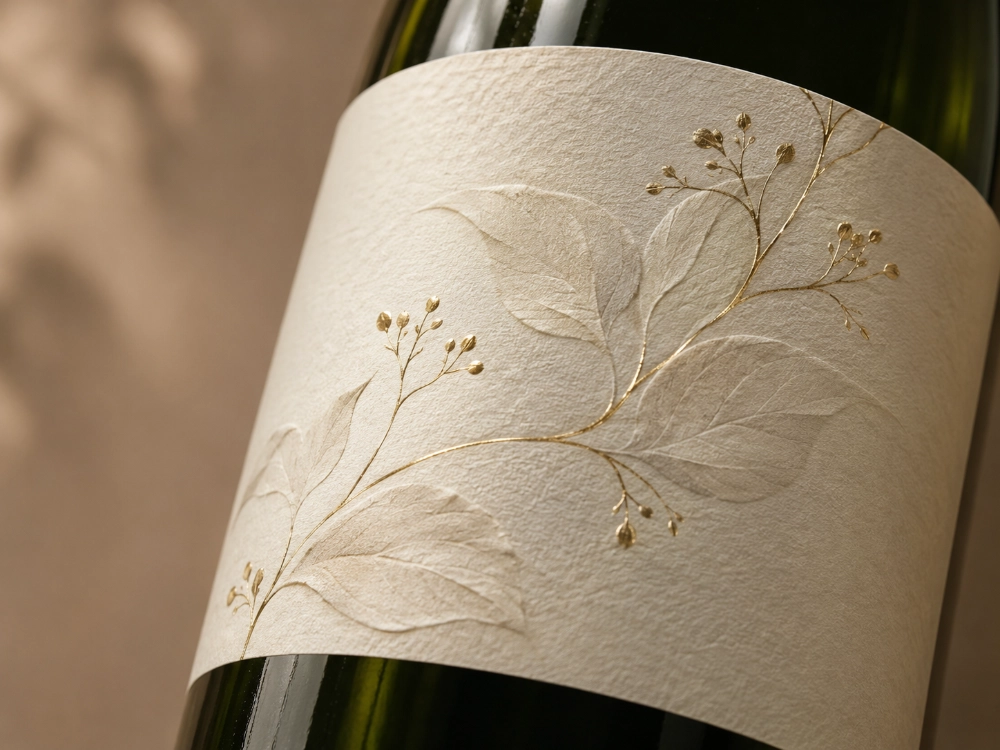
Material Options for Premium Finishing
The look and feel of a bottle label shape how customers perceive the product. Textured wine label papers create a tactile, traditional character, while metallized facestocks add reflective detail and clear films offer a no-label look. Embossing, debossing, hot foil stamping and cold foil transfer provide further ways to highlight crests, typography and decorative patterns. Selecting a surface compatible with the intended finishing process helps preserve fine detail and create a distinctive presentation for premium wines, craft spirits and limited-edition releases.
Bottle Label Materials for Wine, Spirits and Craft Beer
From vintage wine releases to seasonal craft beers, each beverage category brings different labeling requirements. Choose label stock around your bottle format, label placement and the number of product variants in your range.
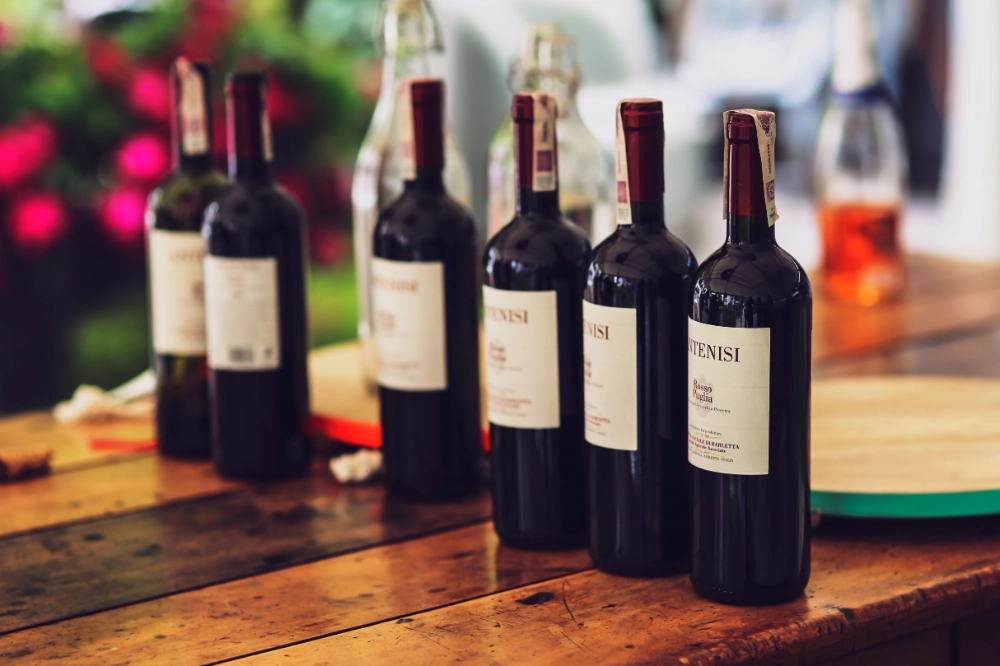
Red Wine Labels
A red wine range often shares a common label layout across vintages, grape varieties and reserve tiers. Use the front label to establish the brand and give each wine a clear identity. Reserve space on the back label for tasting notes, barcodes and market-specific information. When planning a series, specify front and back label dimensions together so the artwork stays consistent across bottle sizes and releases.
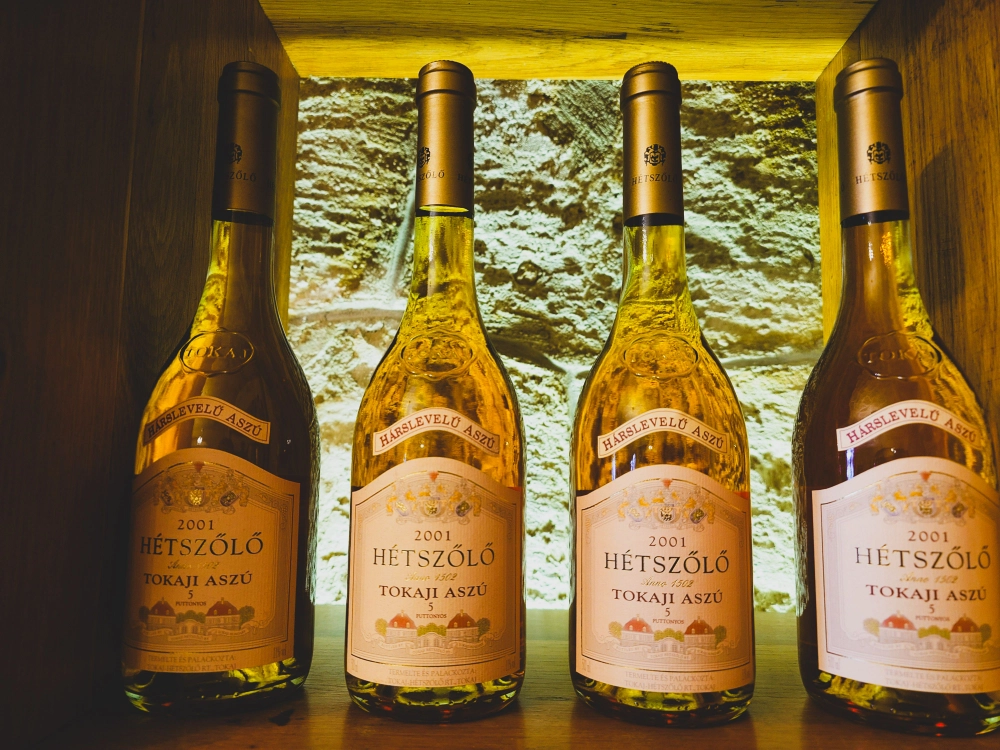
White and Sparkling Wine Labels
Clear glass makes contrast and label placement especially visible. On white wine bottles, check whether the wine color or back label shows through the front design, and specify an opaque facestock where the artwork needs a solid background. For sparkling wine, plan the front label, back label and neck label together. Confirm the available labeling area below the shoulder and around the neck before finalizing the artwork and die lines.
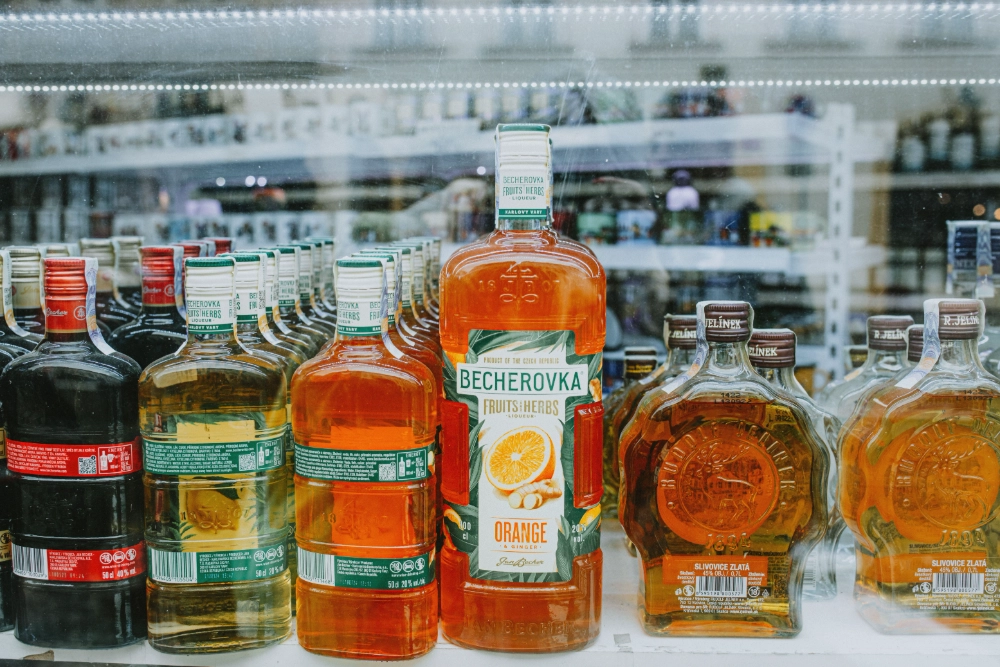
Spirits and Liquor Labels
Whisky, gin and liqueur bottles often have tapered walls, flat panels or sculpted glass. Start with the area the label will actually cover and check where the bottle begins to curve. A front label can frame the brand on a flat panel, while a separate back label leaves room for product details. For limited editions and gift packs, plan bottle labels and carton artwork together so the product name and edition details are easy to recognize.
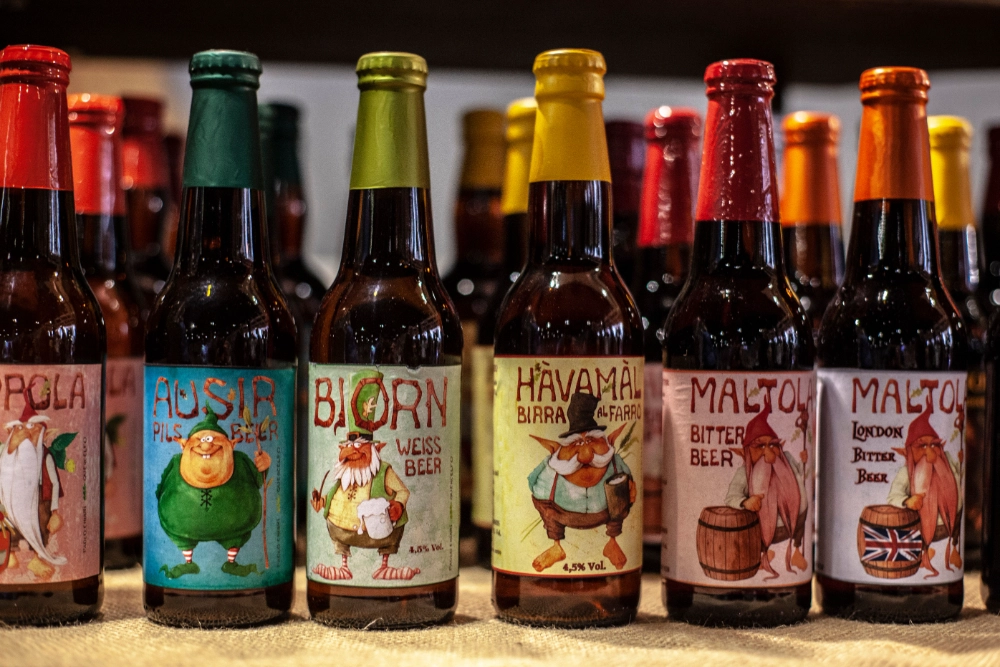
Craft Beer Labels
Seasonal beers, pilot batches and core releases often share a bottle format while carrying different artwork. A common label size across compatible bottles can simplify ordering and artwork changes. Give each beer a clear visual cue, and keep space for style, ABV, barcodes and batch coding. When ordering pressure-sensitive labels for multiple SKUs, specify quantities and roll unwind direction for each version to match the packaging line.
Wine, Spirits and Craft Beer Label Material FAQs
Can self-adhesive wine labels be applied to cold, wet glass bottles?
Yes, if the adhesive is designed for wet application and performs at your actual bottle temperature. A label that holds up in refrigeration after application may still struggle to bond to glass covered in condensation. Test on freshly filled bottles at normal line speed and check for slipping, poor initial tack and edge lift.
How should I test wine bottle labels for ice-bucket use?
Apply the finished labels to your actual bottles and allow the adhesive to bond under conditions that reflect your production process. Then expose the bottles to ice water for the expected serving time. Check for edge lift, wrinkles, paper darkening and loss of print clarity. Use labels with the final inks, varnish or foil so the test reflects the finished packaging.
Should I use wet-strength paper or film for chilled wine and beer labels?
Wet-strength paper is a good starting point when the design calls for a textured paper finish. Film label stock is worth evaluating when bottles face repeated condensation or when the design calls for a clear label. Compare both on your actual bottles after refrigeration and, if relevant, ice-water immersion. Check adhesion and appearance separately, since a label can stay attached while its surface changes visibly.
Why do labels wrinkle or lift on tapered bottles and curved necks?
A rectangular label can wrinkle when its top and bottom edges wrap around different bottle diameters. A stiff facestock can also pull away from a tight curve. Check the bottle drawing at the intended label position, then trial a smaller label, a shape that follows the taper or a more flexible facestock before finalizing the die line.
What creates a clear “no-label look” on spirits bottles?
Start with a clear film and a transparent adhesive, then assess the finished label on the actual bottle. Glass texture, trapped air and adhesive haze can make the label more visible. If the artwork uses white ink behind lettering or graphics, review the printed sample on a filled bottle to check contrast and clarity.
Find the Right Label Stock for Your Bottling Line
Sourcing self-adhesive label stock for wine, spirits or craft beer? Share your bottle type, printing method and labeling conditions, including any condensation or ice-bucket exposure. We’ll help you narrow down material options for sampling and production trials.
Request Label Stock Samples