Oil-and-industrial-chemical-labels
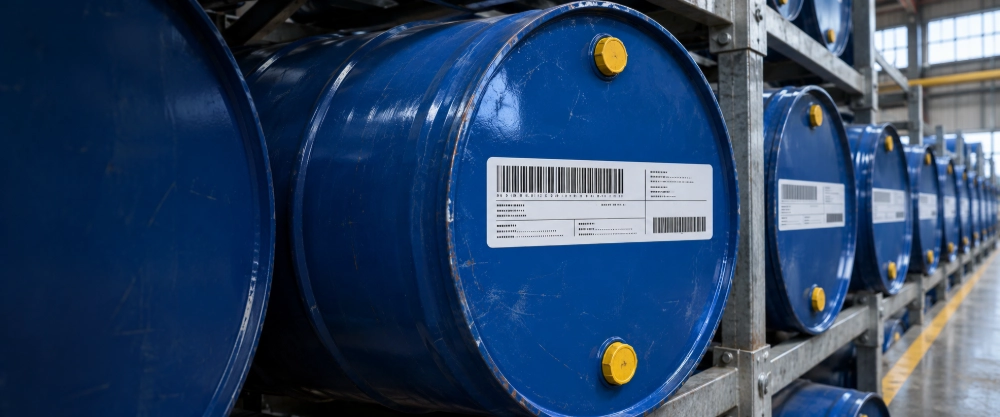
Label Materials for Oils and Industrial Chemicals
Pressure-sensitive label materials for lubricant bottles, chemical drums, HDPE jerry cans and other industrial containers. Select the facestock, adhesive and print system together to keep product identification, handling instructions and batch codes legible through storage, transport and use.
What Industrial Chemical Labels Need to Withstand
A lubricant bottle may be handled with oily gloves. A steel drum may spend weeks in outdoor storage. An HDPE jerry can may be exposed to splashes or handled repeatedly as it moves through a facility. Each application puts different demands on the label. Oils, chemical splashes, moisture, UV exposure and temperature changes can affect adhesion or print legibility. Curved containers and textured surfaces also need attention, especially where label edges are prone to lifting.
For label converters and packaging teams, material selection starts with the container surface, the conditions at application and the exposures the label will face in service. Match the adhesive to the actual substrate, such as HDPE or painted steel, and assess the facestock and print system against the expected chemical contact, abrasion and weather exposure. Test the finished label on the actual container to check for edge lift, print damage and loss of barcode readability. Where hazard information must remain legible, include it in the evaluation and verify the finished label against the requirements for the intended market and use.
What to Consider When Selecting Industrial Chemical Label Materials
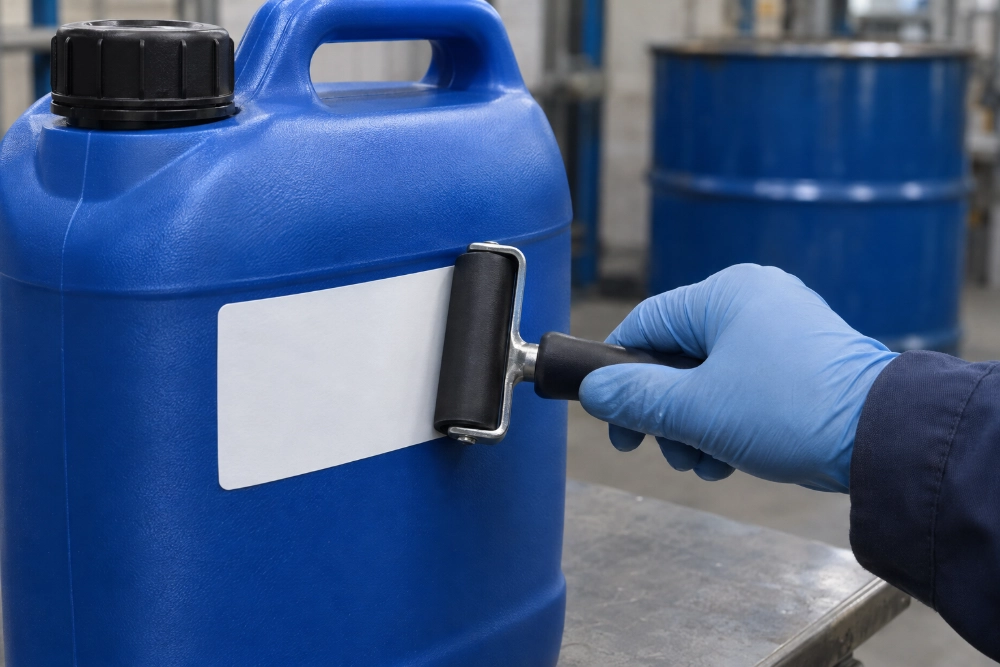
Match the Adhesive to the Container Surface
Identify the actual surface before specifying an adhesive. Molded HDPE, painted steel and bare metal can behave differently during labeling. Note whether the surface is smooth, textured or curved, and record the container temperature at application. Test a full-size label on the actual drum, pail or jerry can to check initial adhesion and look for edge lift after storage.
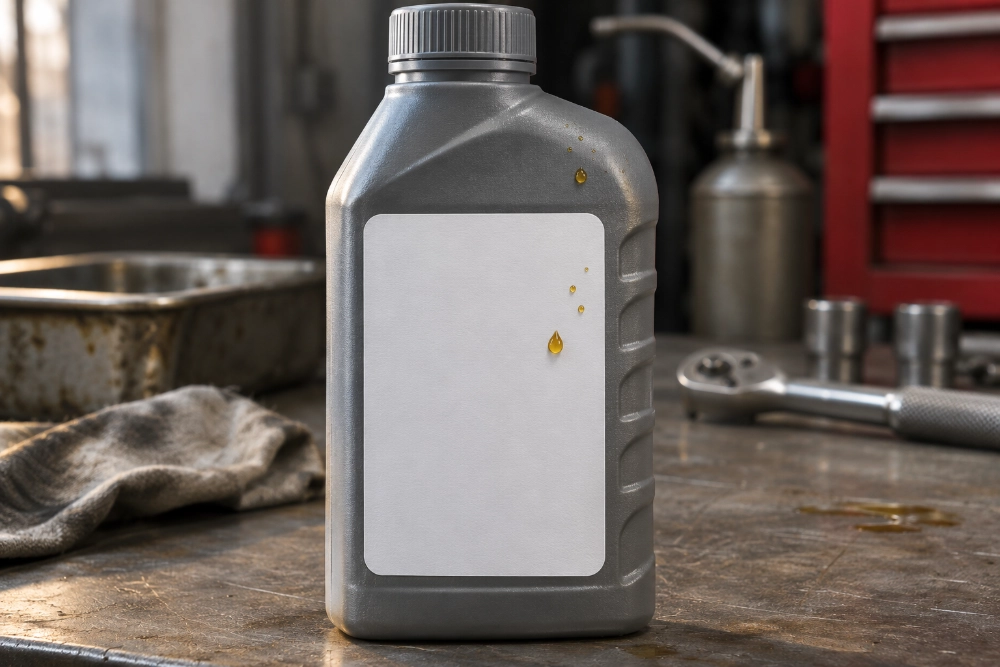
Choose the Facestock for the Expected Exposure
List the oils, solvents or cleaning agents the label may contact, and distinguish occasional splashes from repeated wiping or prolonged exposure. Include outdoor storage, moisture and temperature changes where relevant. When comparing PP and PET film label stocks, evaluate the complete label construction under conditions that reflect how the container will be handled and used.
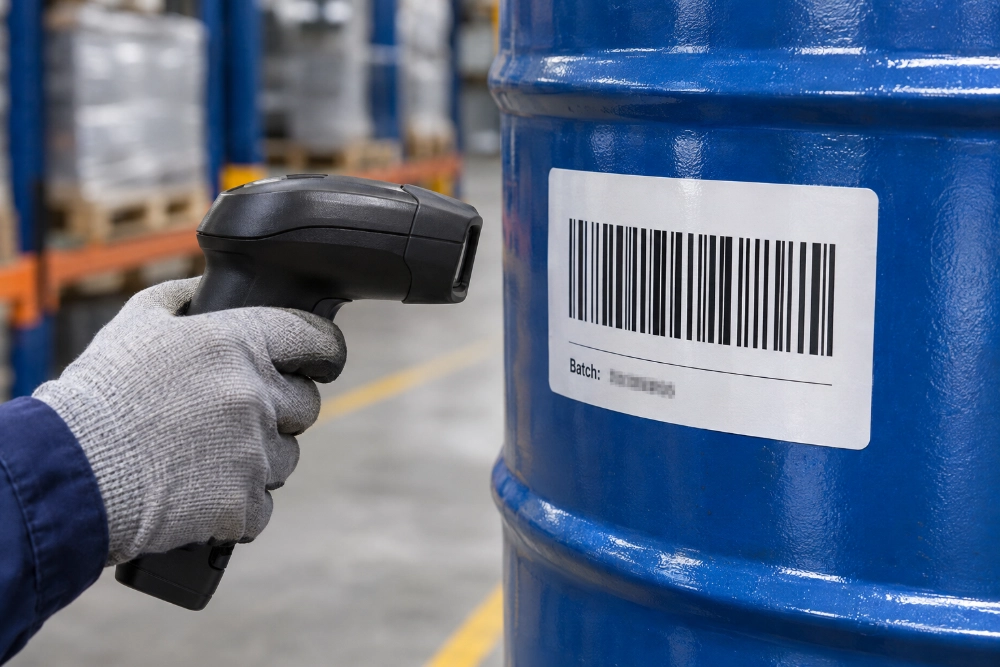
Verify Print Durability and Barcode Readability
Test the label stock with the ink or thermal transfer ribbon and protective finish you plan to use in production. After exposure and handling, check whether warning text remains legible, batch codes resist smearing and barcodes still scan. If the project specifies a transport or durability test, use that requirement when evaluating the finished label.
Self-Adhesive Label Stock for Oils and Industrial Chemicals
Specify the label construction around your container, printing process and conditions in service.
- Container fit. Compare adhesive options for HDPE jerry cans, lubricant bottles and painted steel drums.
- Oil and chemical exposure. Evaluate the finished label against the liquids, contact times and cleaning methods it will encounter.
- Readable product information. Check that batch codes, barcodes and handling instructions remain legible after exposure and handling.
For sample selection, share your container material, print method, label dimensions and expected exposure.
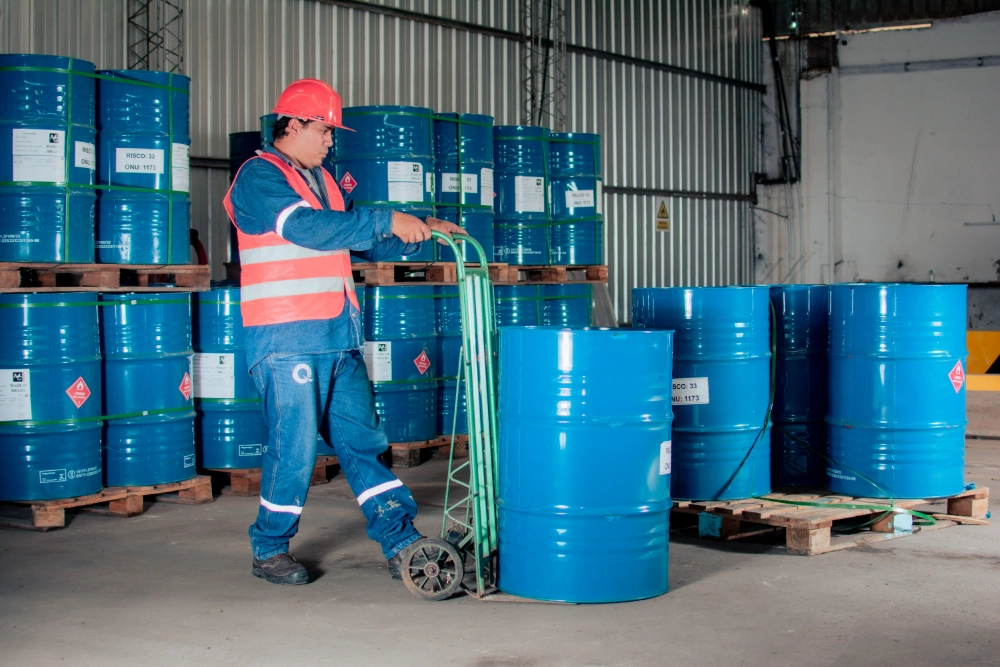
Label Materials for Industrial Chemical Packaging
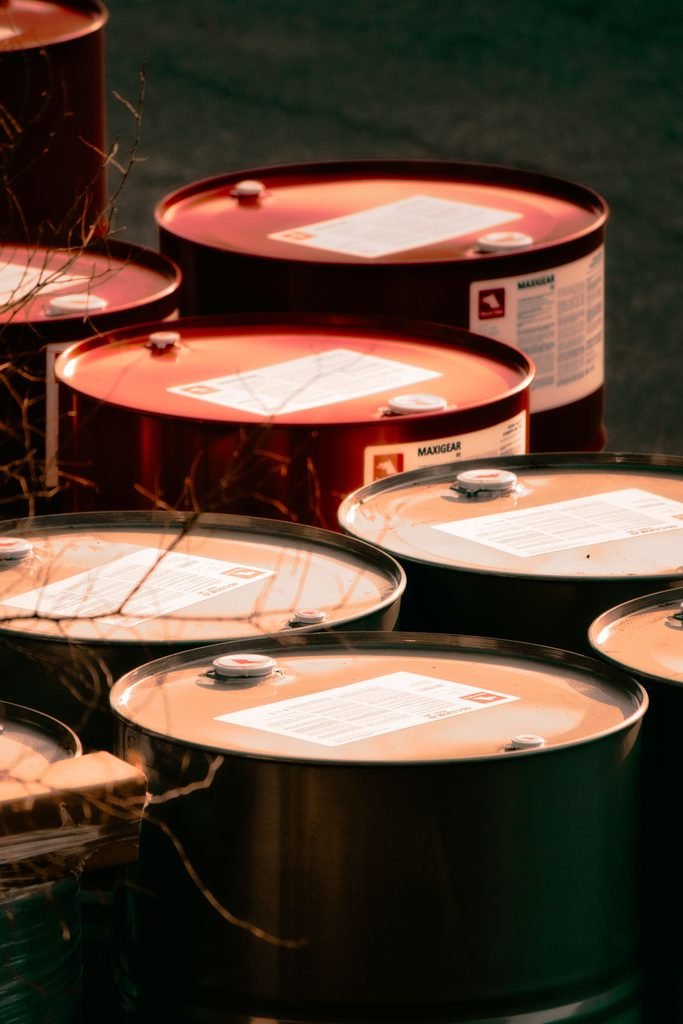
Drum Labels
Steel drums and HDPE drums present different labeling surfaces. For painted steel, check the finish where the label will sit. For molded plastic drums, check the surface texture and how tightly the label must wrap around the barrel. For drums stored outdoors, evaluate whether the finished label stays attached and whether product identifiers and handling instructions remain readable after exposure.

IBC Tote Labels
On an intermediate bulk container (IBC), the label may sit on a dedicated label plate or directly on the plastic tank. Specify the actual mounting surface and measure the available space inside the metal cage. Position product identifiers, batch codes and barcodes so warehouse staff can read or scan them without the cage rails blocking the view.
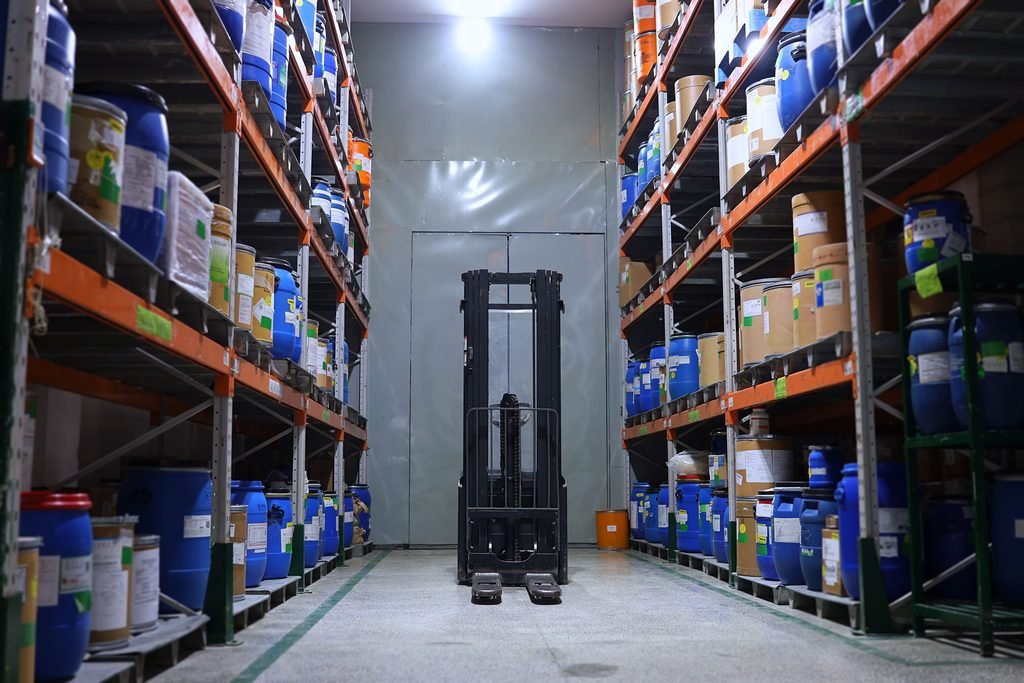
Lubricant Bottle and Oil Jug Labels
Lubricant bottles and oil jugs often have molded handles, angled shoulders and recessed front panels. Size the label to fit the usable panel and check that the edges sit flat on the filled container. For packaging handled with oily gloves or wiped down in workshops, test whether viscosity grades, product names and batch codes remain legible on the finished label.
Industrial and Chemical Label Material FAQs
Why do labels lift at the edges of HDPE chemical drums?
Edge lift can occur when the adhesive makes poor contact with textured HDPE or when a stiff label pulls away from a curved surface. Check the drum surface for contamination and record its temperature at application. Test a full-size label on the actual drum, then inspect the edges after application and again after storage.
Can self-adhesive labels be applied to warm lubricant bottles after filling?
Check the bottle’s surface temperature at the labeling station and compare it with the label stock’s application temperature range. Run a trial on freshly filled bottles at normal line speed. Check whether the label shifts during application or lifts at the edges as the bottle cools.
Will batch codes and barcodes remain readable after contact with oil or solvents?
Performance depends on the facestock, ink or ribbon, and any protective finish. Test the finished label with the actual oil, solvent or cleaning agent it will encounter. Match the test to the expected exposure, such as a brief splash or repeated wiping. Check for smearing and scan the barcode again after exposure.
Can large drum labels be repositioned during hand application?
Some adhesive grades allow a brief adjustment during application. If operators need to correct alignment, trial the full-size label on the actual drum. Check how easily they can reposition it and whether the label edges remain secure after the adhesive has had time to bond.
How do I match industrial label stock to my thermal transfer printer and ribbon?
Start with a facestock specified for thermal transfer printing. Test it with your production printer, ribbon and print settings. Check barcode scanability and the clarity of small text, then repeat those checks after the rubbing, wiping or liquid exposure expected in use.
Request Samples for Your Industrial Label Application
Sourcing self-adhesive label stock for chemical drums, IBC totes or lubricant containers? Tell us what surface you’re labeling, how you print and what the label needs to withstand in use. Include your preferred roll width and estimated order volume if you’d like a quote.
Request Samples or a Quote